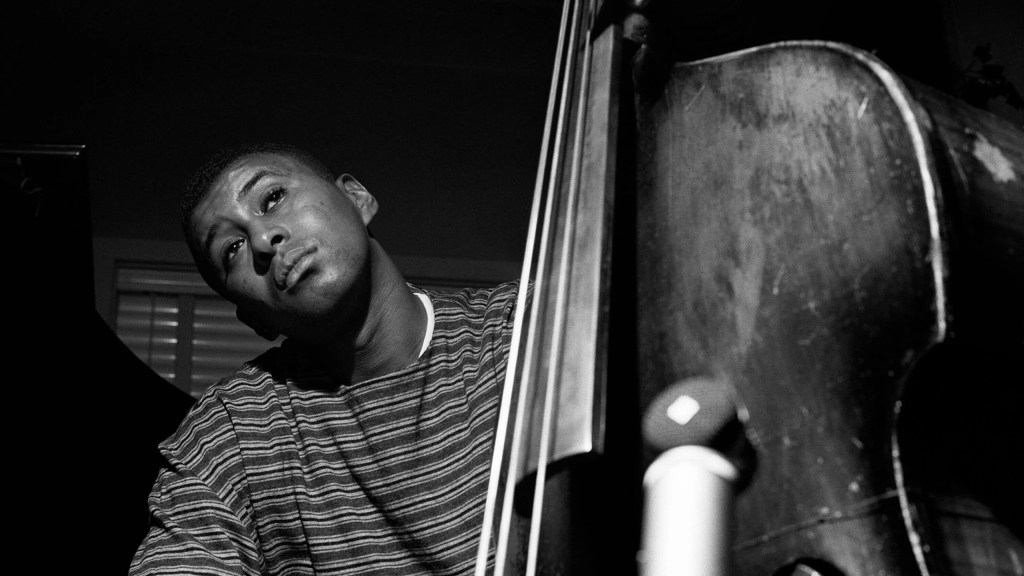
“Paul Chambers didn’t just keep time — he made the bass speak in a language all his own.”
When people talk about jazz bass, Paul Chambers’ name always comes up — usually as a shorthand for elegance, swing, and technical mastery. From his groundbreaking years with the Miles Davis Quintet to those unforgettable bowed solos, he shaped modern jazz in ways that are hard to measure. But there’s more to Chambers than the usual praise, and digging a little deeper reveals the kind of genius that doesn’t always make the headlines.
Chambers didn’t just keep time — he spoke through the bass. Even when his role was purely supportive, his lines had a melodic arc that could stand on their own. He heard the instrument not just as a harmonic anchor, but as a storyteller. Often, the way he chose his notes hinted at counter-melodies, creating these subtle little dialogues with the horns above him.
And then there was the bow. In an era when most bass players treated arco playing as a rare party trick, Chambers made it part of his voice. His bowed solos weren’t about showing off classical chops — they were emotional statements, almost vocal in their phrasing, capable of turning a walking line into something aching and human.
Another thing people don’t talk about enough is his rhythmic magic. Chambers had this way of bending time just enough to make the groove feel alive — tiny pushes and pulls that gave the swing both a laid-back ease and an underlying urgency. It’s a huge part of why the Miles quintet felt so electric without ever rushing or dragging.
The funny thing is, he wasn’t trying to reinvent the bass. Chambers was rooted in tradition, obsessed with refining his craft. But that very devotion ended up expanding what jazz bass could be. His sound wasn’t about ego or grabbing attention — it was about making the music as strong as possible.
Before all of that, he was a Detroit musician through and through. That scene in the ’40s and ’50s was a hotbed of talent, and it shaped his discipline, his swing, and his collaborative spirit. Detroit trained him to play for the band, not just for himself, and that ethos never left him.
Paul Chambers died at just 33, but the depth of what he left behind keeps unfolding for anyone willing to really listen. His genius wasn’t just in the notes he played or the beautiful tone he got — it was in the way he made the bass speak a language entirely his own.
I want to share three amazing recordings with you, plus a few thoughts on each:
Chambers’ walking bass line here is deceptively simple but full of life. Notice how he lays down a steady groove while adding tiny melodic twists that hint at a conversation with the horns. It’s the perfect example of him making the bass both supportive and expressive.
On this album, Chambers takes center stage. Listen to the title track to hear his arco playing — the bow singing almost like a human voice — and how he crafts melodic lines that could easily be a lead instrument. This recording shows the lyrical side of his genius.
Chambers’ sense of timing and subtle rhythmic push-and-pull is front and center here. Pay attention to how he bends the pulse ever so slightly, creating a groove that feels both relaxed and urgent. It’s a masterclass in swing and feel.


 Diego Robledo
Leave a comment